
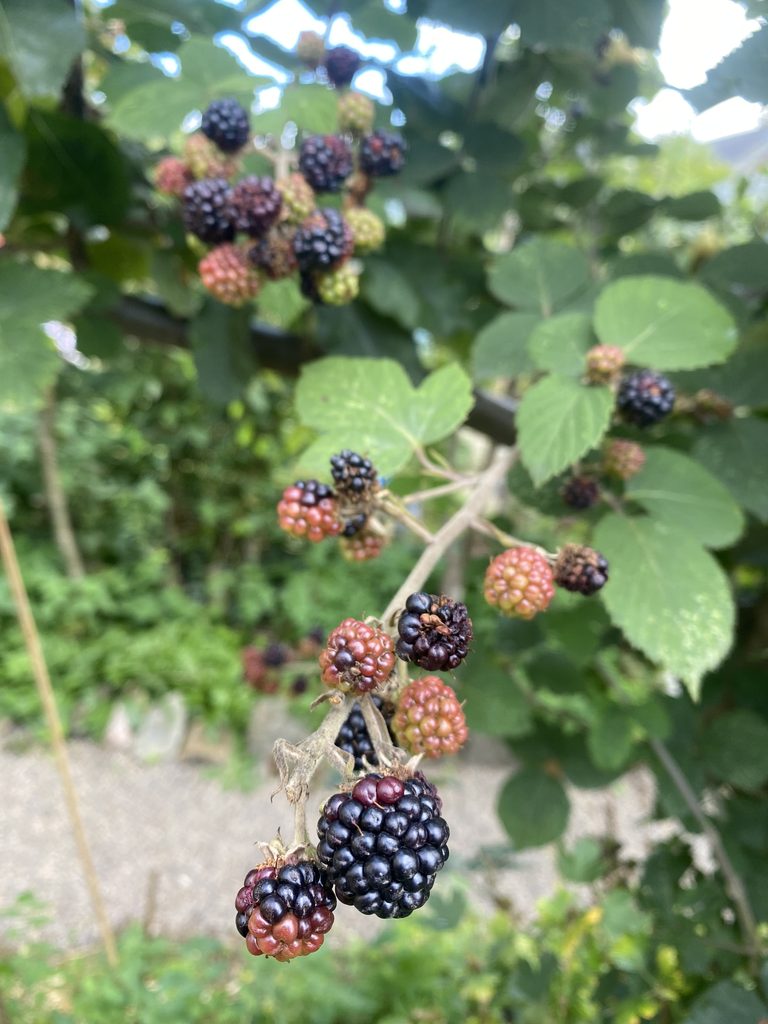
I’ve been harvesting blackberries from two bushes in my garden over the last month. One bush grows up, through and over a mature Bramley apple tree, the other weaves its way round a Victoria plum tree. Each morning with a wee bowl in hand I pick fresh fruit for my oat, seed, nut, yoghurt and honey cereal. It’s a simple joy. The brambles are so juicy. They contain in their purply-black drupelets – fibre, vitamins C and K, and powerful antioxidants that support heart, brain, and digestive health. Medicine for sure.
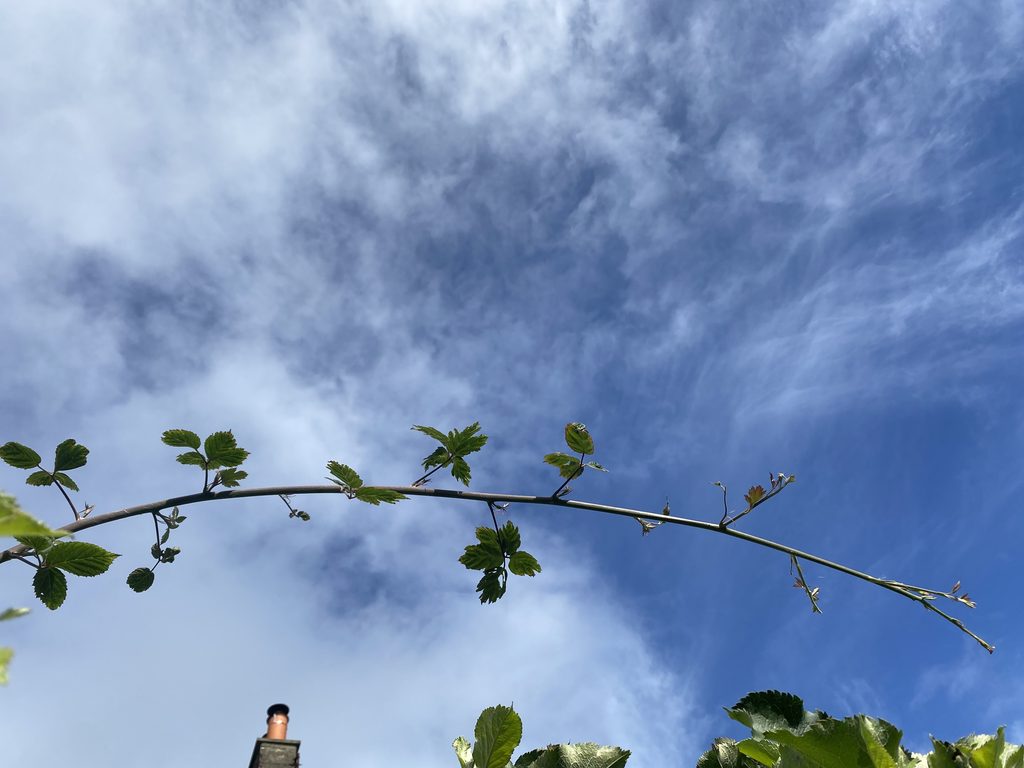
The bramble bush that’s supported by the Bramley apple has grown out of the top of the tree and is forming an arch over my garden path. A bramble arch is a blackberry cane that arches over and re-roots its tip into the soil and is believed to hold potent magic. Passing under this natural hoop was thought to strip away illnesses.
Some believe that the crown of thorns Jesus was made to wear to his crucifixion was a prickly bramble.
Of course, the European folktale collected by the Brothers Grimm and Charles Perrault – Little Briar Rose is the tale of Sleeping Beauty, hidden for 100 years behind an impenetrable thorny briar. Indeed, in days-gone-by, before barbed wire, defences were strengthened with briar.
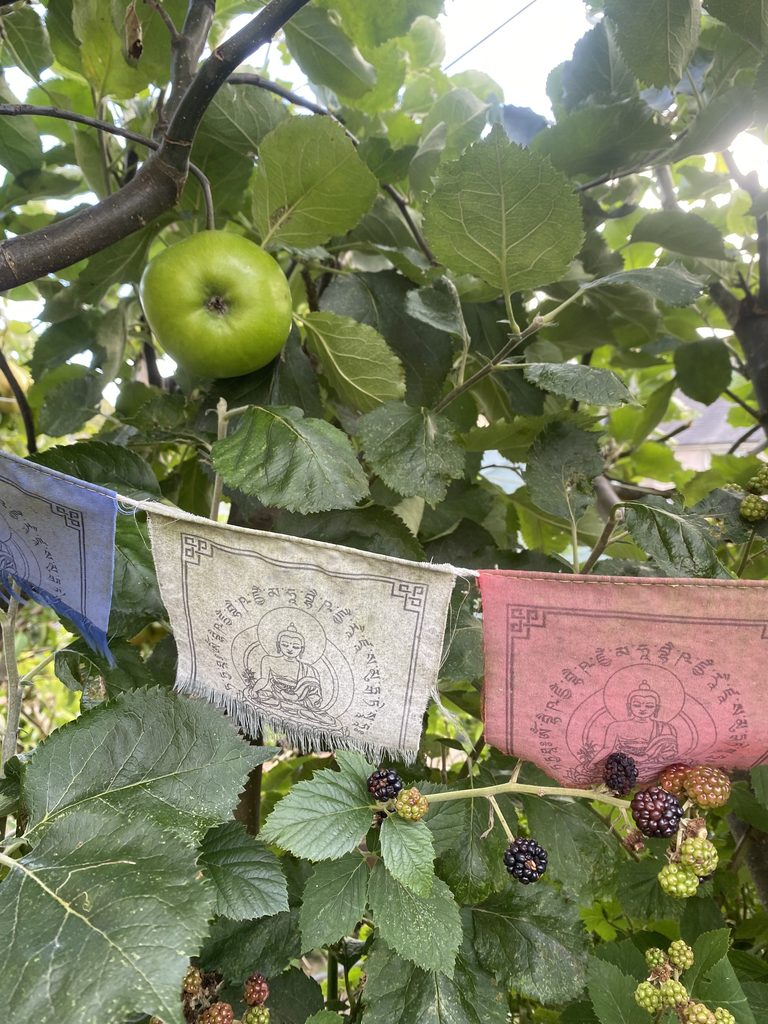
Wiccans believe that the blackberry turning from green, to red and then black represents the three aspects of their goddess: maiden, mother and old crone.
In the UK the blackberry bush supports over one hundred species of insects, birds, and mammals with food, shelter and nesting sites.
It’s best not to harvest blackberries after early October as they go mouldy, but with climate change this closing date may like many others be pushed further forward in the calendar. I was harvesting outside-grown tomatoes in November last year.
Leave a Reply