Yarns

  • Blackberries, Brambles, Briar

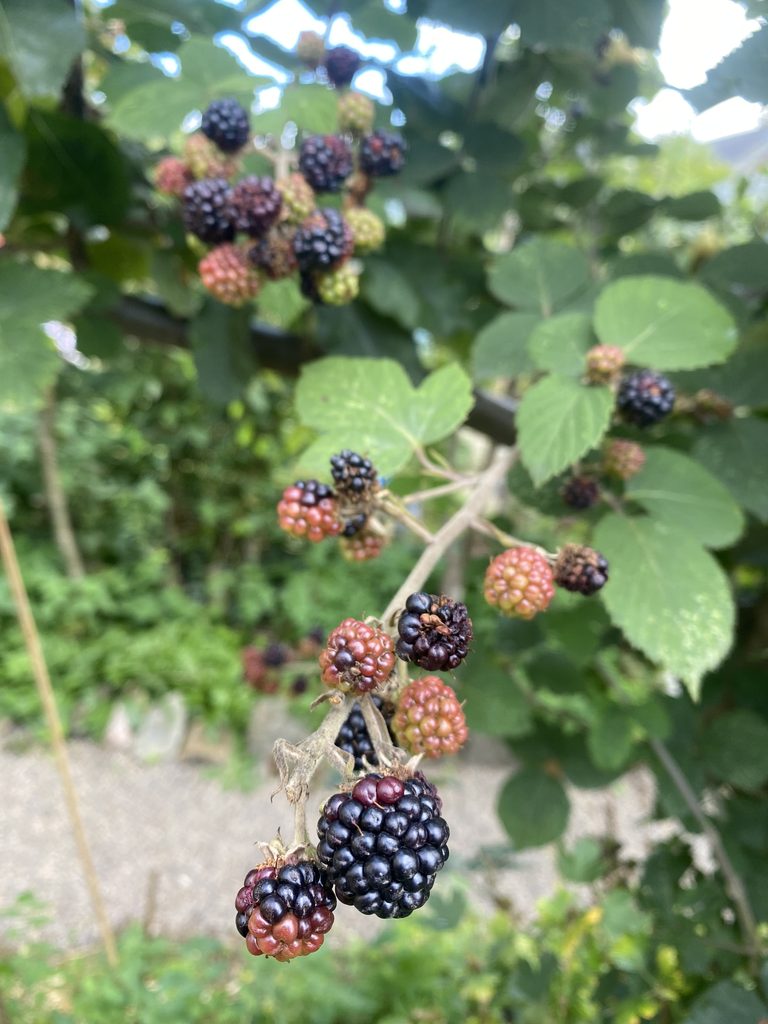
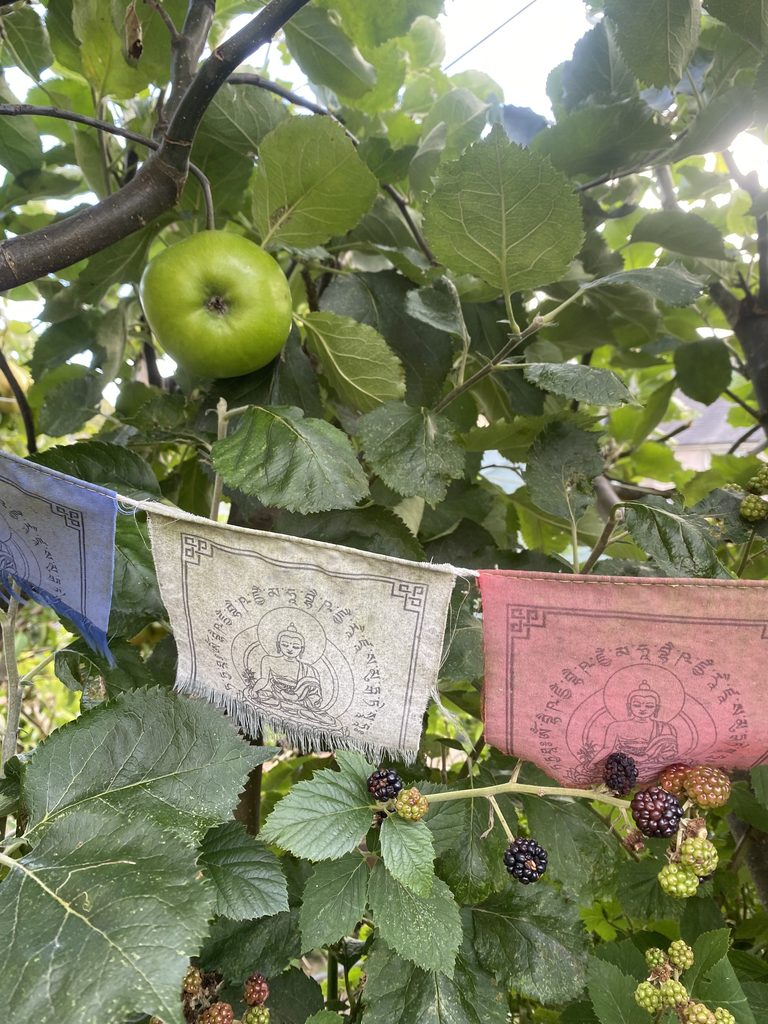
    I’ve been harvesting blackberries from two bushes in my garden over the last month. One bush grows up, through and over a mature Bramley apple tree, the other weaves its way round a Victoria plum tree. Each morning with a wee bowl in hand I pick fresh fruit for my oat, seed, nut, yoghurt and honey cereal. It’s a simple joy. The brambles are so juicy. They contain in their purply-black drupelets – fibre, vitamins C and K, and powerful antioxidants that support heart, brain, and digestive health. Medicine for sure.

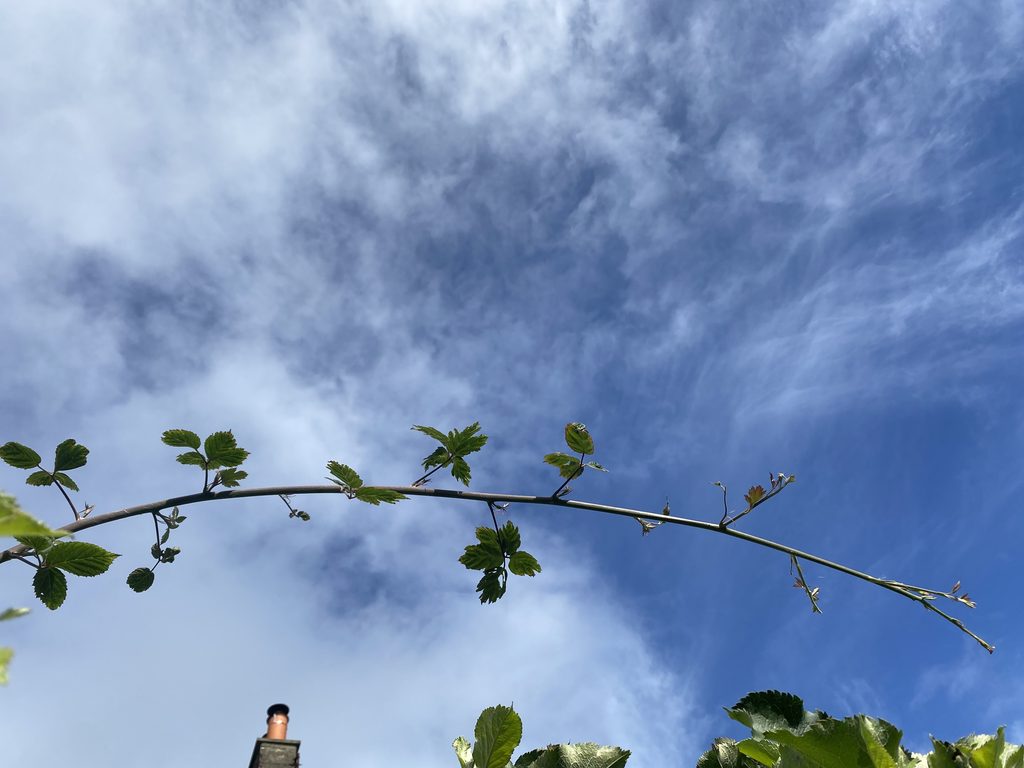
    The bramble bush that’s supported by the Bramley apple has grown out of the top of the tree and is forming an arch over my garden path. A bramble arch is a blackberry cane that arches over and re-roots its tip into the soil and is believed to hold potent magic. Passing under this natural hoop was thought to strip away illnesses.

    Some believe that the crown of thorns Jesus was made to wear to his crucifixion was a prickly bramble.

    Of course, the European folktale collected by the Brothers Grimm and Charles Perrault – Little Briar Rose is the tale of Sleeping Beauty, hidden for 100 years behind an impenetrable thorny briar. Indeed, in days-gone-by, before barbed wire, defences were strengthened with briar.

    Wiccans believe that the blackberry turning from green, to red and then black represents the three aspects of their goddess: maiden, mother and old crone.

    In the UK the blackberry bush supports over one hundred species of insects, birds, and mammals with food, shelter and nesting sites.

    It’s best not to harvest blackberries after early October as they go mouldy, but with climate change this closing date may like many others be pushed further forward in the calendar. I was harvesting outside-grown tomatoes in November last year.

  • East Lothian Pippin

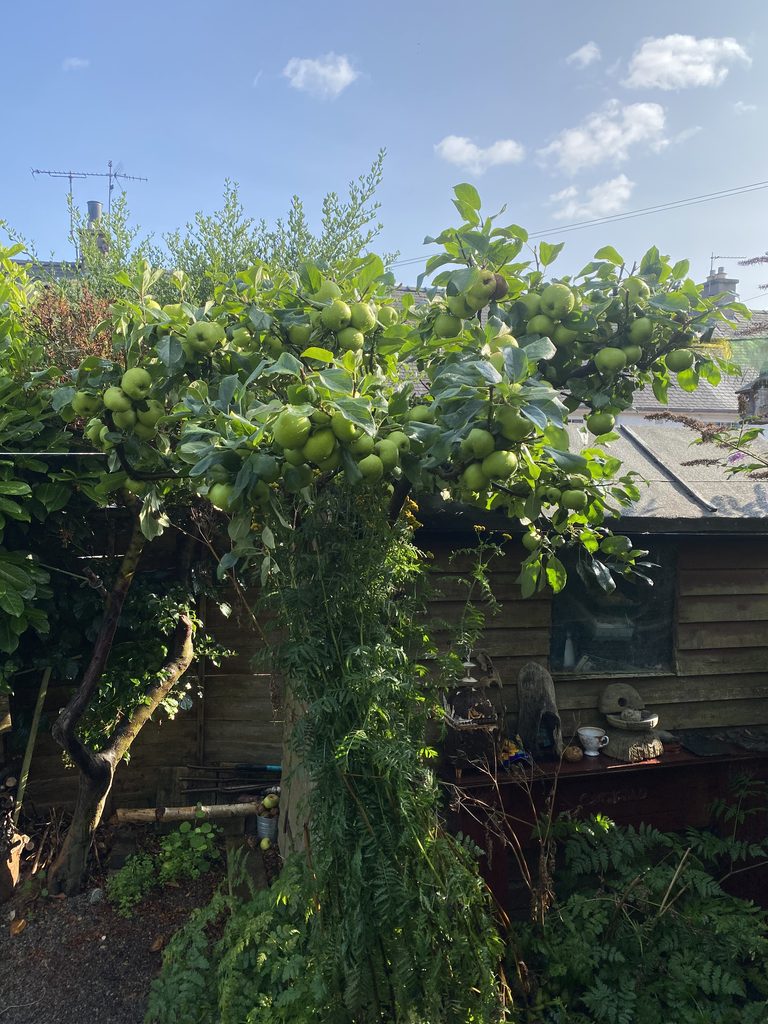
    Picture of an east lothian pippin ripe with fruit August 2026

    I planted this East Lothian Pippin (cooker) about six years ago and it’s been a phenomenal producer. It’s clearly enjoying the optimal space in the garden for sunshine.

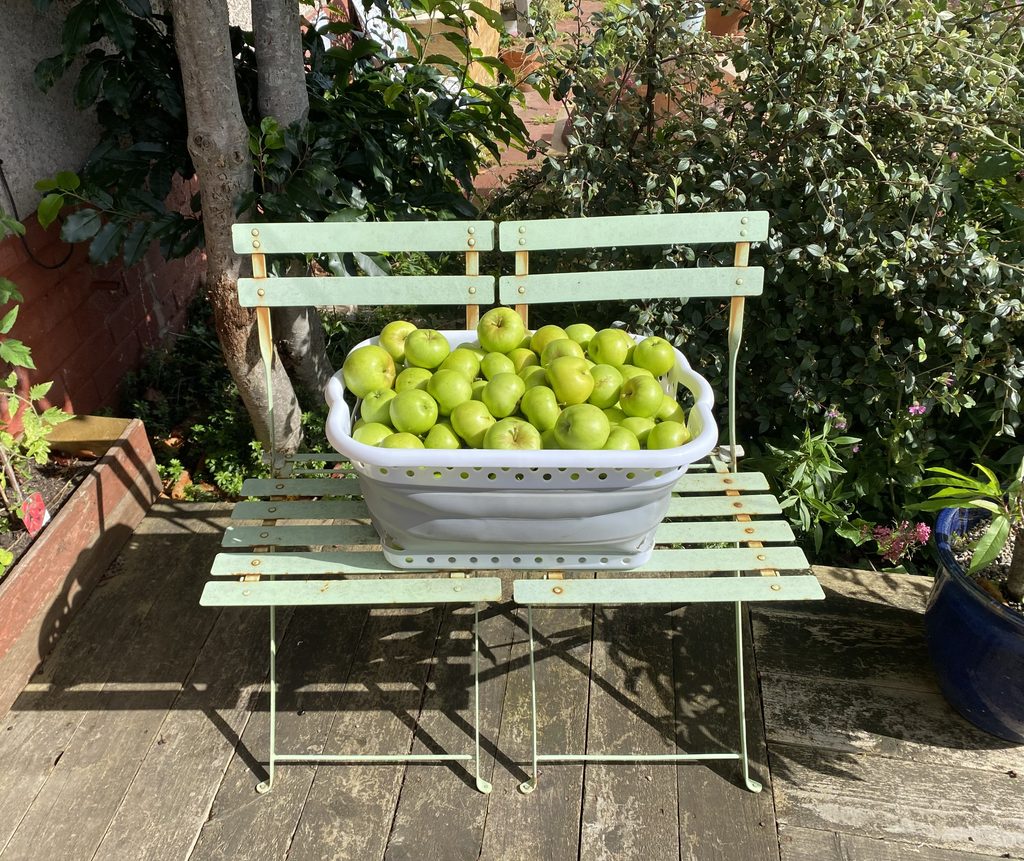
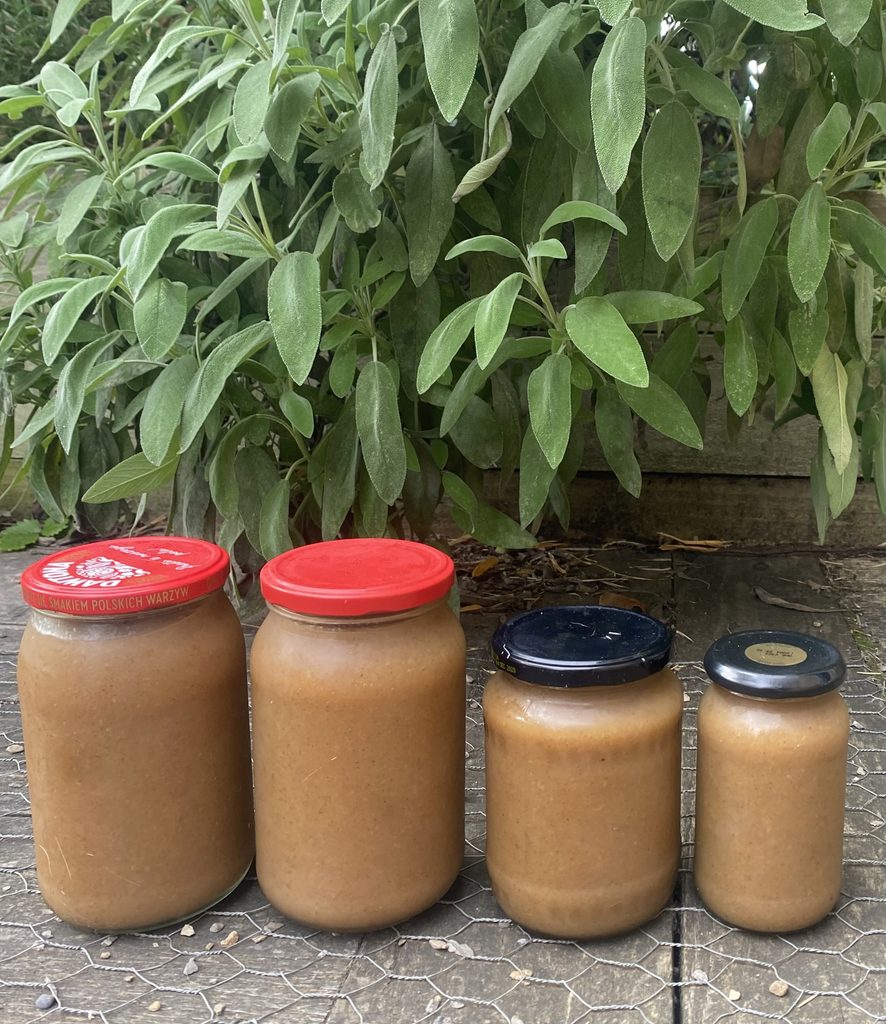
    Last week I harvested 16 kilos (36lbs) of apples from it. I made apple butter from most of the bounty and gave my neighbours a few kilos too.

    There was considerable windfall as well, much of which I left for the insects, who then made a meal of themselves for the birds.

    The East Lothian Pippin was first recorded in 1881 from Tyninghame Gardens. I purchased mine from Appletreeman in Perthshire.

    Apple tree branches make excellent wands for kids and druids.

    The apple of discord thrown by Eris the goddess of strife, resulted in the Trojan War. Today it means the crux of an argument. It’s a good name for a band or an LP too.

    Apple butter is delicious spread on toast or spooned onto the top of your cereal. It’s easy to make – the East Lothian Pippin’s fluff up into puree with the slightest heat. I added cinnamon, ginger and nutmeg to my recipe and used some of last years cider as added flavour.

    Chop the apples into quarters, no need to core, add to a large pan, stir in spices, add a sweetener, reduce on a low heat, press through a sieve and spoon the resultant butter into steralised jars. It keeps in the fridge for ages.

    My East Lothian Pippin tree is companion planted with Goldenrod, Wild Garlic, Lady’s Mantle and Sweet Cicely.